Similarities and Pattern Identification

Similarities and Pattern Identification
NVR questions very often requires that you spot patterns and similarities between shapes.
You will be expected to apply the patterns you have recognised to identify either missing objects or odd-ones-out.
Similarities and Pattern Identification
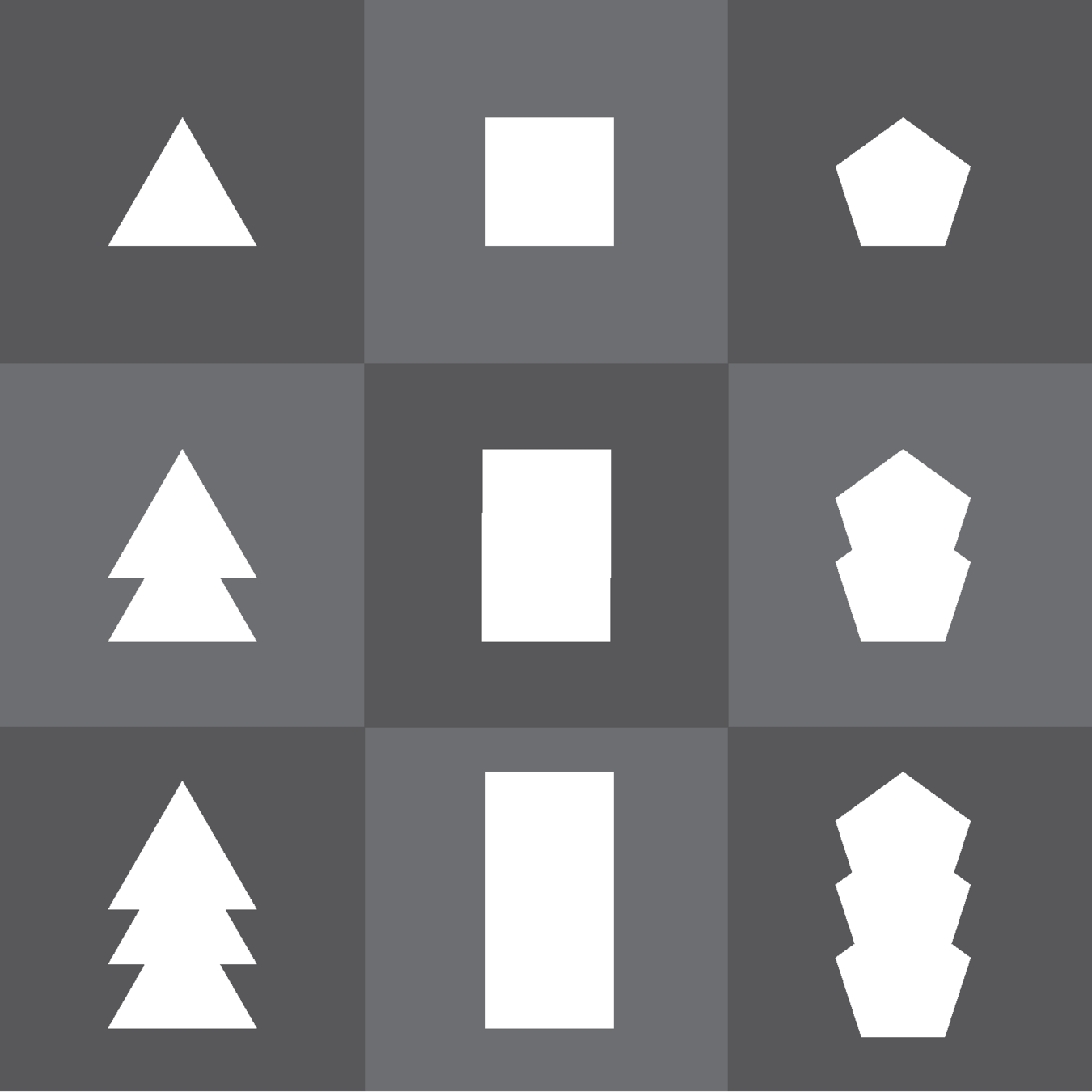
Study the grid below. You will notice there is a fixed pattern across the two axis.
Similarities and Pattern Identification
Study the grid below. You will notice there is a fixed pattern across the two axis.
Moving left to right, one side is added to the shape each step.
Similarities and Pattern Identification
Study the grid below. You will notice there is a fixed pattern across the two axis.
Moving left to right, one side is added to the shape each step.
Similarities and Pattern Identification
Study the grid below. You will notice there is a fixed pattern across the two axis.
Moving left to right, one side is added to the shape each step.
Moving downwards from the top, one copy of the shape is added for each step.
Similarities and Pattern Identification
Study the grid below. You will notice there is a fixed pattern across the two axis.
Moving left to right, one side is added to the shape each step.
Moving downwards from the top, one copy of the shape is added for each step.
Similarities and Pattern Identification
Study the grid below. You will notice there is a fixed pattern across the two axis.
Moving left to right, one side is added to the shape each step.
Moving downwards from the top, one copy of the shape is added for each step.
Because of the shape of the square, it may be hard to notice, but when you compare it with the other changes, it's clear that the same is happening even here.
Similarities and Pattern Identification
Study the grid below. You will notice there is a fixed pattern across the two axis.
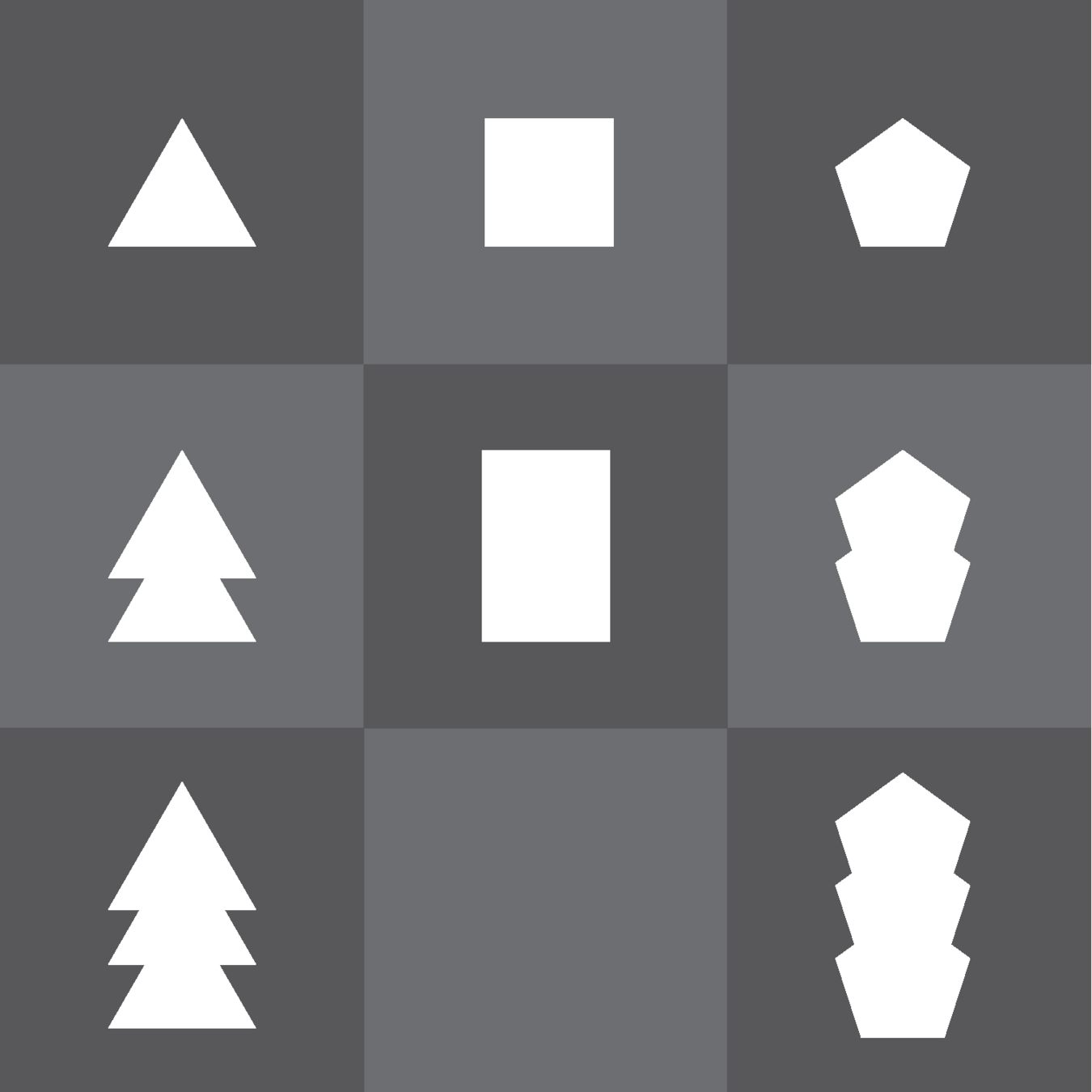
For your 11+ NVR, you will be expected to identify these patterns and apply them to find a missing shape.

Similarities and Pattern Identification
Study the grid below. You will notice there is a fixed pattern across the two axis.
For your 11+ NVR, you will be expected to identify these patterns and apply them to find a missing shape.
Similarities and Pattern Identification
Study the grid below. You will notice there is a fixed pattern across the two axis.
Or you may be expected to identify the odd one out.

Looking at the middle square of the last row, it's clear that it doesn't follow the expected pattern. While there are indeed three objects, and the objects are of the right type, the way they have been added is different.
In all the other squares, the number of objects increase along a vertical axis.
Similarities and Pattern Identification
Study the grid below. You will notice there is a fixed pattern across the two axis.
Or you may be expected to identify the odd one out.
Looking at the middle square of the last row, it's clear that it doesn't follow the expected pattern. While there are indeed three objects, and the objects are of the right type, the way they have been added is different.
In all the other squares, the number of objects increase along a vertical axis.
In the bottom middle square they follow a diagonal axis instead.
Similarities and Pattern Identification
Study the grid below. You will notice there is a fixed pattern across the two axis.
Or you may be expected to identify the odd one out.
It's clear that this square is the odd-one -out.
Similarities and Pattern Identification
Here is a grid with a more complex pattern. Can you identify the pattern here?
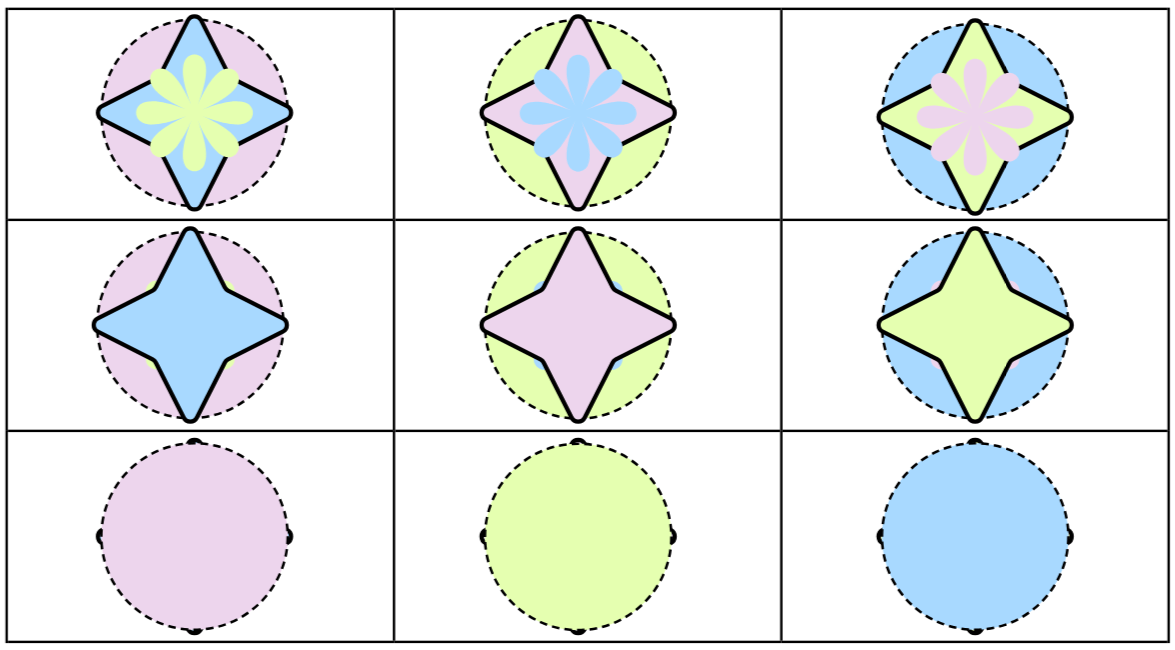
The repeated colour pattern is easy to notice.
The dotted circle is pink in one column, green in the second and blue in the third.
pink
green
blue
The repeated colour pattern is easy to notice.
The dotted circle is pink in one column, green in the second and blue in the third.
It seems clear that each element change colour from column to column. While the circle is pink in the first column, the star is pink in the second colour and the flower shape is pink in the third column.
Circle is pink
Circle is green
Circle is blue
pink
green
blue
The repeated colour pattern is easy to notice.
The dotted circle is pink in one column, green in the second and blue in the third.
It seems clear that each element change colour from column to column. While the circle is pink in the first column, the star is pink in the second colour and the flower shape is pink in the third column.
We can also see that the stacking of elements changes
The flower symbol is in front in the first row, the star is in front in the second row and the circle is in front on the third row.
flower symbol
first row
star
second row
circle
third row
Circle is pink
Circle is green
Circle is blue
The repeated colour pattern is easy to notice.
The dotted circle is pink in one column, green in the second and blue in the third.
It seems clear that each element change colour from column to column. While the circle is pink in the first column, the star is pink in the second colour and the flower shape is pink in the third column.
We can also see that the stacking of elements changes
The flower symbol is in front in the first row, the star is in front in the second row and the circle is in front on the third row.
flower symbol
first row
star
second row
circle
third row
First row: Flower in front
2nd row: star in front
3nd row: circle in front
Circle is pink
Circle is green
Circle is blue
Having identified the pattern to the changes, we can make a prediction for the missing segment.
flower symbol
first row
star
second row
circle
third row
First row: Flower in front
2nd row: star in front
3nd row: circle in front
Circle is pink
Circle is green
Circle is blue
The circle will be green
The circle will be in front
Having identified the pattern to the changes, we can make a prediction for the missing segment.
flower symbol
first row
star
second row
circle
third row
First row: Flower in front
2nd row: star in front
3nd row: circle in front
Circle is pink
Circle is green
Circle is blue
The circle will be green
The circle will be in front
Identifying shapes in patterns
Identifying shapes in patterns
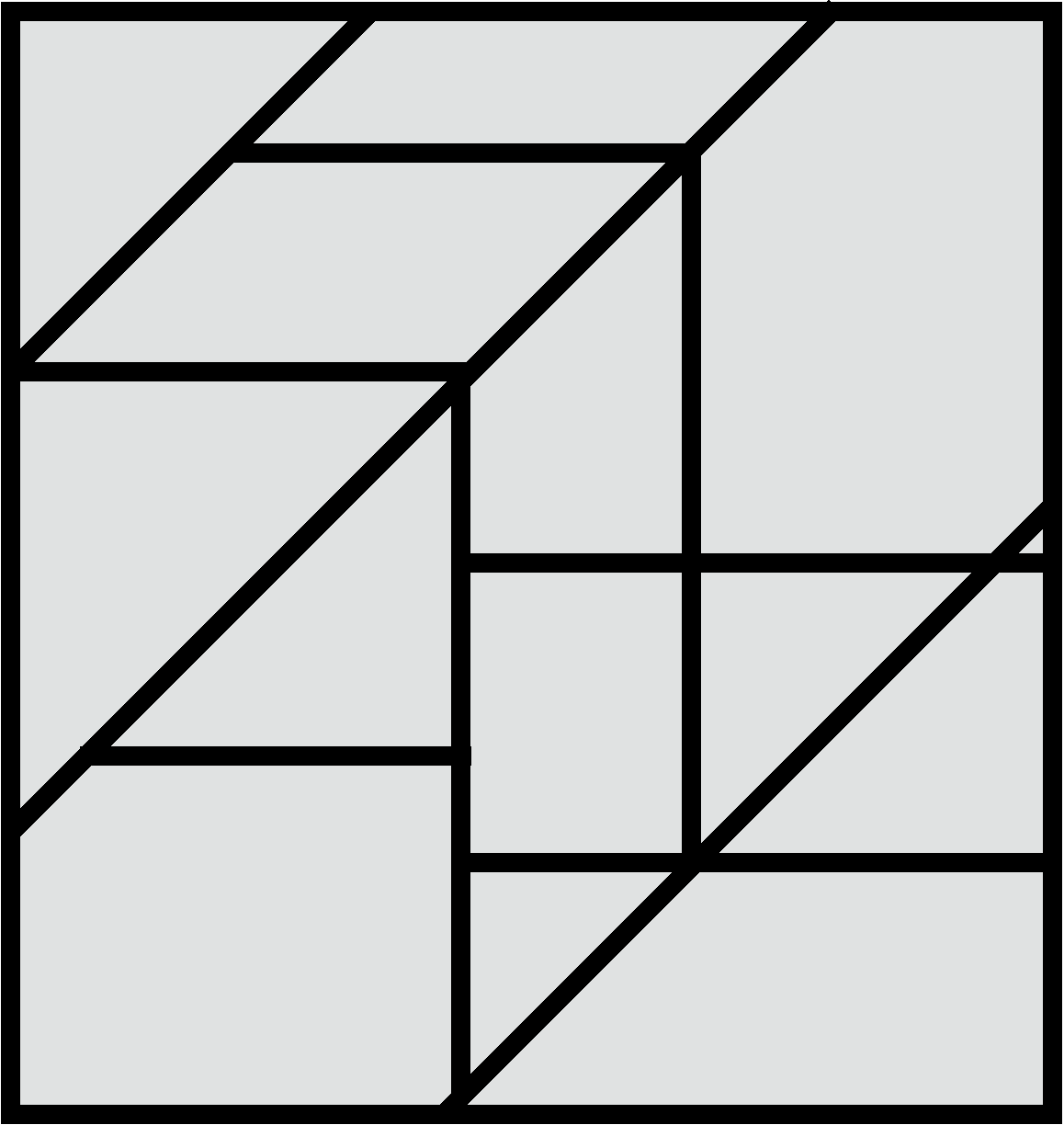
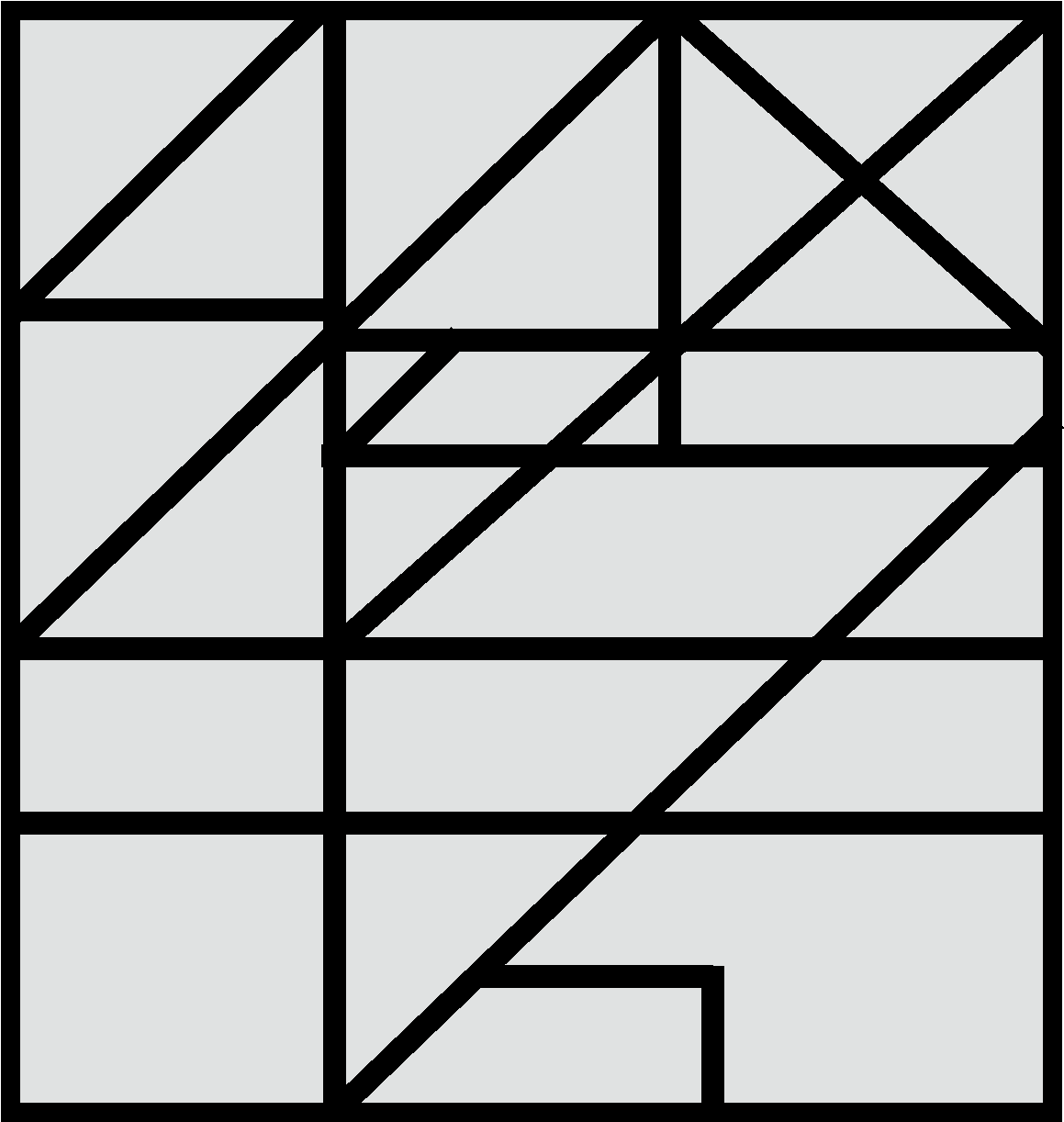
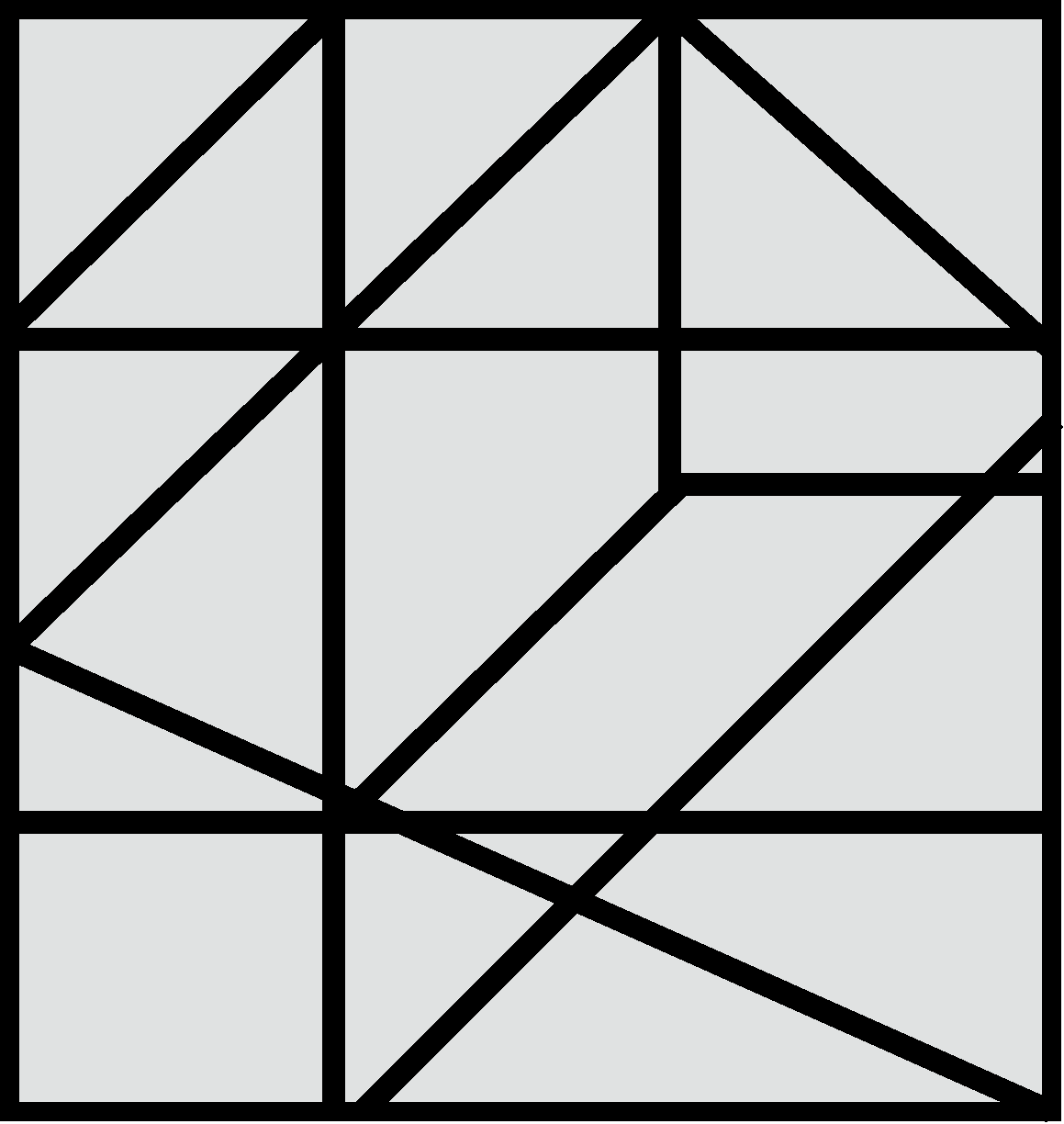
You may be asked to identify shapes hidden within a pattern. This may not always be as easy as it sounds.
Identifying shapes in patterns
You may be asked to identify shapes hidden within a pattern. This may not always be as easy as it sounds.

This object has not been scaled, flipped or rotated. One of the shapes contain it. Can you spot it?

Identifying shapes in patterns
You may be asked to identify shapes hidden within a pattern. This may not always be as easy as it sounds.
This object has not been scaled, flipped or rotated. One of the shapes contain it. Can you spot it?
Identifying shapes in patterns
Start by looking at the most noticeable features, such as the main angles.
Identifying shapes in patterns
Start by looking at the most noticeable features, such as the main angles.
You should expect a number of red herrings put in to trick you, but let's look at some possible options.
Identifying shapes in patterns
Start by looking at the most noticeable features, such as the main angles.
You should expect a number of red herrings put in to trick you, but let's look at some possible options.
You will find the 45° angle appears in all the alternatives.
Identifying shapes in patterns
We can quickly rule out most options.
Line missing
You will find the 45° angle appears in all the alternatives.
Identifying shapes in patterns
Start by looking at the most noticeable features, such as the main angles.
We can quickly rule out most options.
Too narrow
Identifying shapes in patterns
Start by looking at the most noticeable features, such as the main angles.
We can quickly rule out most options.
Too long
Identifying shapes in patterns
Start by looking at the most noticeable features, such as the main angles.
We can quickly rule out most options.
Not aligned
Identifying shapes in patterns
Start by looking at the most noticeable features, such as the main angles.
We can quickly rule out most options.
In the end there's only one possible option left. The right answer is "b".
Identifying shapes in patterns
Let's look at another type of pattern recognition
Identifying shapes in patterns
Let's look at another type of pattern recognition
Which of these shapes best fits this pair?





The top shape is black
The bottom shape is mirrored
The bottom shape is filled with horizontal lines
Identifying shapes in patterns
Let's look at another type of pattern recognition
Which of these shapes best fits this pair?
The top shape is black
The bottom shape is filled with horizontal lines
The bottom shape is mirrored
Identifying shapes in patterns
Let's look at another type of pattern recognition
Which of these shapes best fits this pair?
The top shape is black
The bottom shape is mirrored
The bottom shape is filled with horizontal lines
Identifying shapes in patterns
Let's look at another type of pattern recognition
Which of these shapes best fits this pair?
The top shape is black
The bottom shape is mirrored
The bottom shape is filled with horizontal lines
Identifying shapes in patterns
Let's look at another type of pattern recognition
Which of these shapes best fits this pair?
Identifying shapes in patterns
Let's look at another type of pattern recognition
This time we will look for patterns across many different shapes.
Identifying shapes in patterns








Which of the shapes below matches the above group best?

Identifying shapes in patterns
Which of the shapes below matches the above group best?
At first, questions like this may seem overwhelming. The key is to examine the features closely. It can be helpful to take notes while you do this.
Identifying shapes in patterns
Let's first look at the number of vertices (corners) and note them down.
Which of the shapes below matches the above group best?
Identifying shapes in patterns
Let's first look at the number of vertices (corners) and note them down.
Which of the shapes below matches the above group best?
Identifying shapes in patterns
We're starting to notice a pattern: each object has one more vertex (corner) than the one directly inside it.
Which of the shapes below matches the above group best?
Identifying shapes in patterns
We're starting to notice a pattern: each object has one more vertex (corner) than the one directly inside it.
Which of the shapes below matches the above group best?
But what about the colours. At first they appear random, but if we look closely, the same shape always have the same colour: the triangles are always blue, the squares always pink, the pentagons always blue, the hexagons always pink.
Identifying shapes in patterns
Which of the shapes below matches the above group best?
But what about the colours. At first they appear random, but if we look closely, the same shape always have the same colour: the triangles are always blue, the squares always pink, the pentagons always blue, the hexagons always pink.
It seems that objects with an even number of sides are always pink, while those with an odd number of sides are consistently blue.
Identifying shapes in patterns
Which of the shapes below matches the above group best?
Let’s examine the rules we've identified in relation to the available options.
Text
Option a: The outer shape has 6 sides, the middle shape has 5 sides and the inner shape has 4 sides. This matches the pattern of -1 vortex for each step.
The outer shape has an even number of sides, but it's blue not pink. This does not match the expected pattern. Let's rule out option a for now.
Identifying shapes in patterns
Which of the shapes below matches the above group best?
Let’s examine the rules we've identified in relation to the available options.
Text
Option b: The outer shape now has 8 vertices, the next 6, and the inner shape has 5. This does not match the expected pattern of one less vertices as you move inwards. Let's rule out option b for now.
Identifying shapes in patterns
Which of the shapes below matches the above group best?
Let’s examine the rules we've identified in relation to the available options.
Text
Option c: The outer shape in a pentagon with 5 vertices, the middle shape is an octagon with 8 vertices and the inner shape is a triangle with 3 vertices. Again, this does not match the expected pattern of one less vertices as you move inwards. Let's rule out option c for now.
Identifying shapes in patterns
Which of the shapes below matches the above group best?
Let’s examine the rules we've identified in relation to the available options.
Text
Option d: The outer shape in has 6 vertices, the middle shape has 5 vertices and the inner shape has 4 vertices. This matches the expected pattern.
The outer shape is pink with an even number of vertices, the middle one, with an odd number of vertices is blue and the inner one with an even number is pink. This matches what we were expecting.
Identifying shapes in patterns
Which of the shapes below matches the above group best?
Let’s examine the rules we've identified in relation to the available options.
Text
Option d is the only objects that meet all parts of the pattern we identified. Clearly this is the correct answer.
Identifying shapes in patterns
-
Look for Changes: Pay close attention to changes in size, shape, colour, position, or shading across the shapes.
-
Count and Compare: Count elements like sides, angles, or shapes within a figure to spot patterns.
-
Focus on Movement: Check if parts of the shapes rotate, flip, or shift positions in a sequence.
-
Check for Symmetry: Look for patterns involving symmetry or repetition in the arrangement of shapes.
-
Eliminate Options: Use the process of elimination to narrow down choices if you're unsure—rule out answers that don't fit the pattern.
Identifying shapes in patterns
-
Look for Changes: Pay close attention to changes in size, shape, colour, position, or shading across the shapes.
-
Count and Compare: Count elements like sides, angles, or shapes within a figure to spot patterns.
-
Focus on Movement: Check if parts of the shapes rotate, flip, or shift positions in a sequence.
-
Check for Symmetry: Look for patterns involving symmetry or repetition in the arrangement of shapes.
-
Eliminate Options: Use the process of elimination to narrow down choices if you're unsure—rule out answers that don't fit the pattern.
Identifying shapes in patterns
-
Look for Changes: Pay close attention to changes in size, shape, colour, position, or shading across the shapes.
-
Count and Compare: Count elements like sides, angles, or shapes within a figure to spot patterns.
-
Focus on Movement: Check if parts of the shapes rotate, flip, or shift positions in a sequence.
-
Check for Symmetry: Look for patterns involving symmetry or repetition in the arrangement of shapes.
-
Eliminate Options: Use the process of elimination to narrow down choices if you're unsure—rule out answers that don't fit the pattern.
Identifying shapes in patterns
-
Look for Changes: Pay close attention to changes in size, shape, colour, position, or shading across the shapes.
-
Count and Compare: Count elements like sides, angles, or shapes within a figure to spot patterns.
-
Focus on Movement: Check if parts of the shapes rotate, flip, or shift positions in a sequence.
-
Check for Symmetry: Look for patterns involving symmetry or repetition in the arrangement of shapes.
-
Eliminate Options: Use the process of elimination to narrow down choices if you're unsure—rule out answers that don't fit the pattern.
Identifying shapes in patterns
-
Look for Changes: Pay close attention to changes in size, shape, colour, position, or shading across the shapes.
-
Count and Compare: Count elements like sides, angles, or shapes within a figure to spot patterns.
-
Focus on Movement: Check if parts of the shapes rotate, flip, or shift positions in a sequence.
-
Check for Symmetry: Look for patterns involving symmetry or repetition in the arrangement of shapes.
-
Eliminate Options: Use the process of elimination to narrow down choices if you're unsure—rule out answers that don't fit the pattern.

Well done! You should now have a very good understanding of similarities and patterns in non-verbal reasoning. NVR requires a lot of practice, however, so the next step is to get going with some of our NVR mock tests. Don't despair if your first scores aren't as good as you had hoped. The key to NVR tests is familiarity with the question types. Keep practicing and you will notice that you get a little bit better and a little bit faster each time.